

Most organizational challenges are not only structural.
They are patterned.
I work with leaders and teams to uncover the assumptions, dynamics, and recurring ways of seeing that shape how people decide, communicate, and act.
So that change becomes intentional — not just reactive.
Where this work becomes relevant

This work usually becomes relevant in situations where nothing is obviously broken — but things are not working as they could.
For example:
- decisions take longer than expected, even with experienced people involved
- alignment requires constant effort instead of emerging naturally
- similar tensions or issues keep resurfacing across teams or contexts
- communication increases, but leads to little clarity or movement
- responsibility is carried, but not from a stable or shared foundation
- there is a sense that more would be possible — but something essential is missing
These are rarely problems of capability or motivation.
More often, they are expressions of underlying dynamics that are active — but not fully visible.
In many organizations, these dynamics are embedded in everyday interactions,assumptions, and ways of working.
They don’t appear as clear problems — but as recurring patterns that are difficult to change directly.
What changes through this work
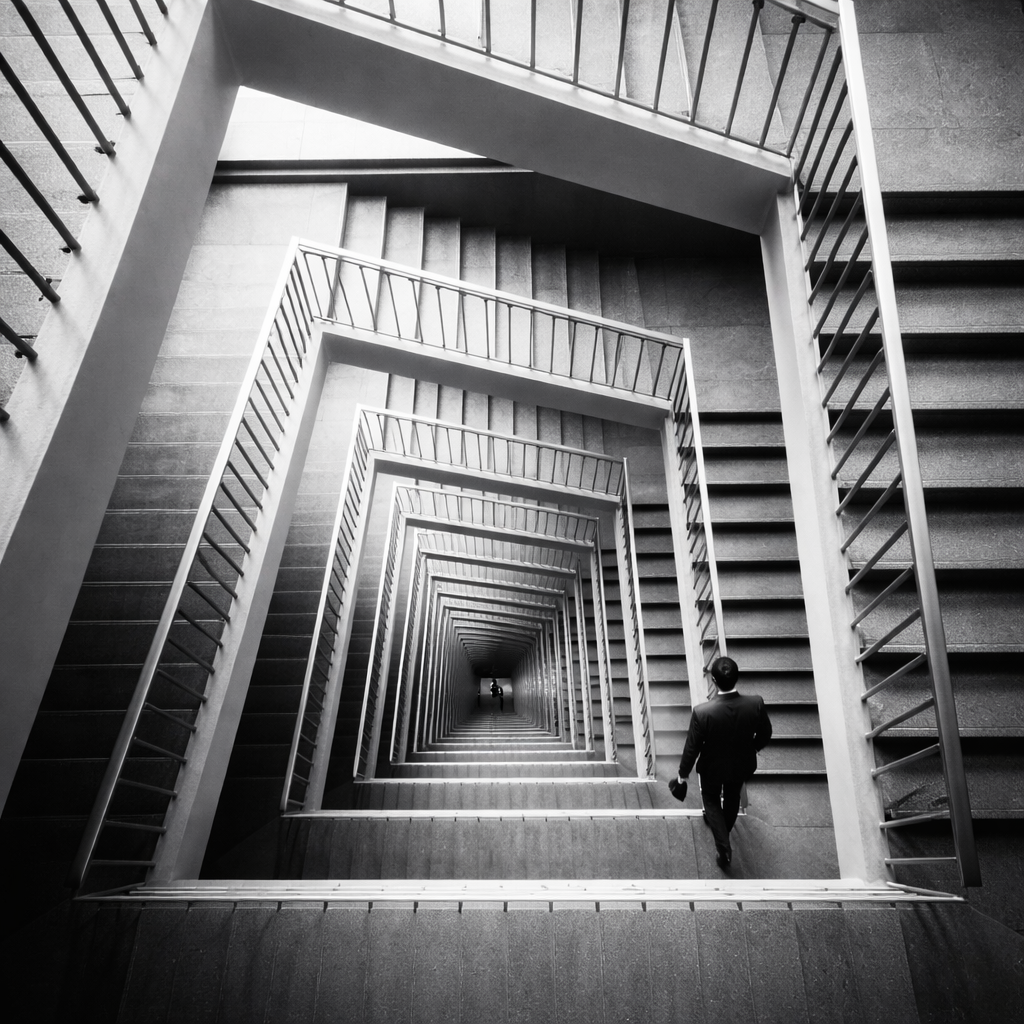
The focus is not on introducing new tools or frameworks.
Instead, the work makes existing patterns visible — in how decisions are made, how responsibility is taken, and how people relate to each other.
This often affects how quickly decisions are made, how stable alignment is,
and whether recurring issues actually change.
Over time, this can lead to:
- decisions becoming clearer and requiring less back-and-forth
- alignment emerging more naturally, instead of being enforced
- recurring tensions losing intensity or dissolving entirely
- leadership acting from a more stable and owned position
- conversations becoming more direct and less defensive
These changes are not imposed from the outside.
They emerge from a different understanding of the situation itself — and therefore tend to hold.
How I work
There is no predefined format for this work.
Depending on the situation, it may take the form of:
- focused conversations with individual leaders
- small-group sessions to explore specific tensions
- workshops or offsites to work on shared dynamics
The exact form is not decided in advance.
What remains consistent is how the work is approached:
- staying with what actually matters — not just what is easy to discuss
- making underlying dynamics visible, especially where they are currently implicit
- avoiding both premature solutions and unnecessary complexity
- ensuring that responsibility remains with the people involved
While the direction is not predefined, the work itself is guided with care — to stay with what matters, make relevant patterns visible, and avoid both premature solutions and endless reflection.
The goal is not to “fix” the organization from the outside — but to enable clearer perception and more intentional action from within.

Getting started
It usually starts with a short conversation to understand the situation and context.
From there, we decide whether and how it makes sense to work together.
In many cases, this first conversation already creates a shift in perspective.